OpenAI is now selling ads inside ChatGPT, and RedTag can place them. Before anyone moves budget, it's worth knowing what the platform can and can't do yet. There's no keyword bidding, only free-tier users see the ads, and reporting can lag two days. This post covers how the targeting actually works, why it's a strategy problem before it's a media buy, and how we'd structure a first test.
Matt Parks
September 9, 2026
Share this post
Copied to clipboard
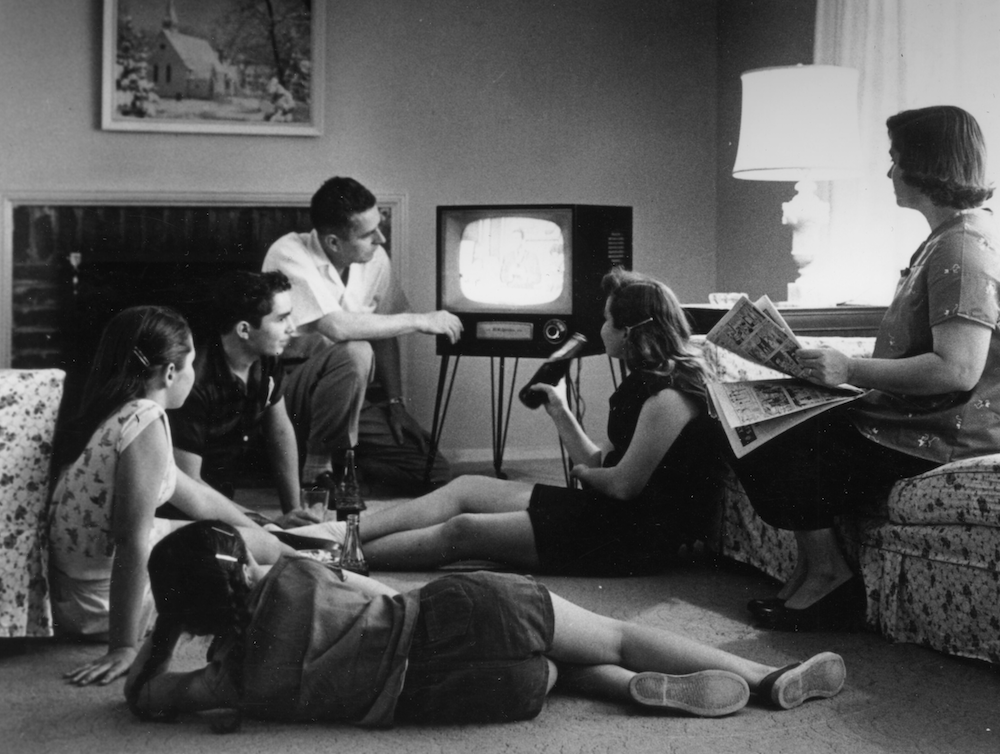
On July 1st, 1941, a watch company bought the first legal television commercial in American history.
It ran on WNBT in New York at 2:29 in the afternoon, right before the Dodgers played the Phillies. It was ten seconds long and it was barely an ad by any standard we'd recognize now: a test-pattern clock face with the Bulova logo on it and announcer Ray Forrest saying America runs on Bulova time. Bulova was billed nine dollars for it, four for airtime and five in station charges.
Nine dollars, because there was almost nobody to show it to. Maybe four thousand television sets existed in the New York area. There was no way to know who watched, whether anyone was in the room, or whether a single watch got sold because of it. Television was widely understood to be a novelty for rich people, and the serious advertising money stayed in radio and print for another decade.
Bulova bought it anyway.
That ad didn't move product. What it bought was a decade of head start on a medium that eventually swallowed the entire industry. By the time everyone else showed up, Bulova had already made the mistakes.
Why is that story important? Because ChatGPT just started selling ads, and the situation rhymes.
Where We Are
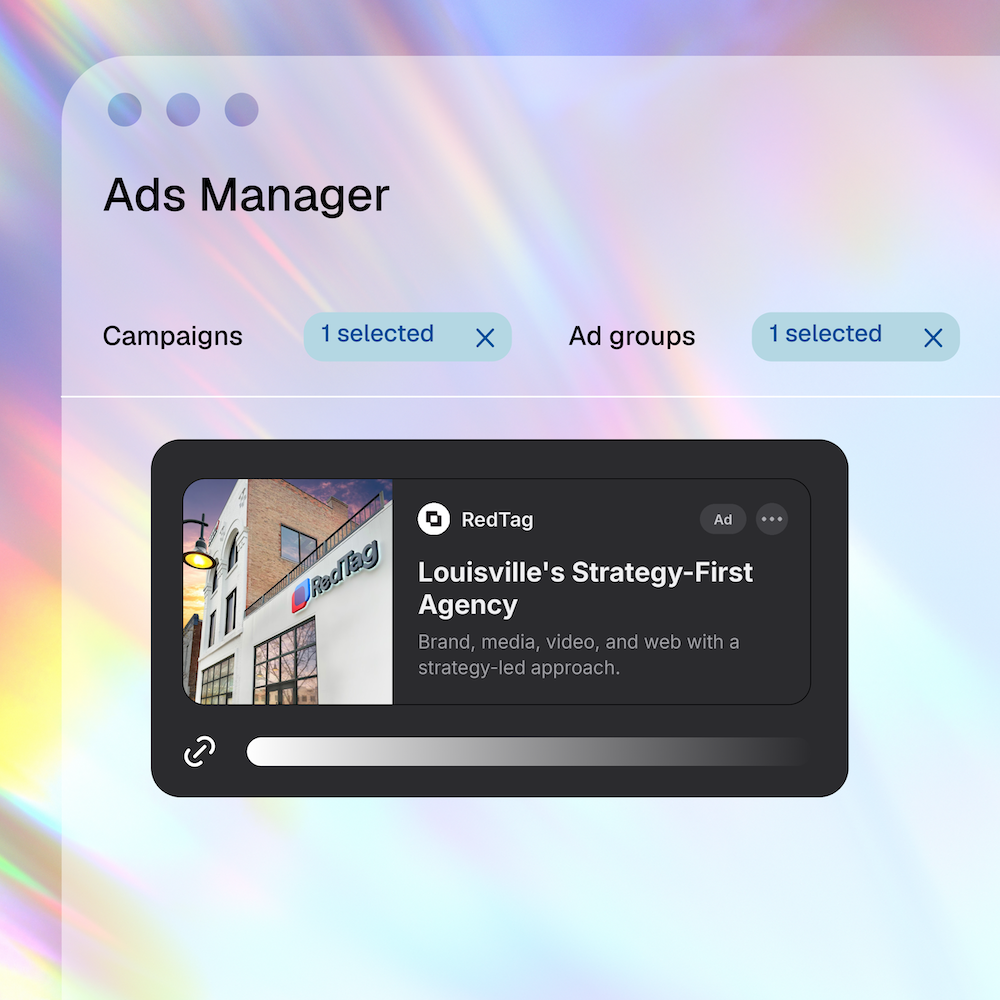
OpenAI is rolling out advertising inside ChatGPT, and RedTag can now place campaigns there for clients. We have live tests running as of this week.
We've been here before. We were the first Facebook Blueprint certified buyer in Kentucky and one of the first agency partners on TikTok, both back when those platforms were unproven and slightly embarrassing to recommend. Facebook ads in 2012 were rough. Targeting was crude, reporting was thin, and results swung wildly month to month. The brands that tested anyway built an advantage that held for years, mostly because they understood the platform's logic before the auction got expensive.
That's the bet here. It's worth being honest that it is a bet.
Why the Audience Is Worth Your Attention
The case for showing up early rests on where research and buying decisions are actually happening, and that has moved faster than most people realize.
OpenAI put ChatGPT at more than 900 million weekly active users in late February 2026, more than double the 400 million it reported a year earlier. Google is still the biggest game in town by a wide margin, but its grip has loosened enough to notice: Statcounter measured its global search share falling below 90 percent in early 2025, the first time in a decade.
The shopping behavior is the more interesting signal. Adobe's survey work puts roughly 39 percent of US consumers as having used generative AI for online shopping, with product research the most common thing they use it for. What happens next is the part worth sitting with. Adobe Analytics measured AI-referred traffic to US retail sites growing 393 percent year over year in the first quarter of 2026, drawn from about a trillion visits. By March, that traffic was converting 42 percent better than non-AI sources, which is a complete reversal from a year earlier when it converted 38 percent worse. People arriving from an AI conversation have already done their comparison shopping inside it.
Then there's the age split, which is the number we'd watch if we were planning three years out. Among 18 to 24 year olds, 66 percent use ChatGPT to find information, against 69 percent who use Google. That gap is three points and closing.
We'd rather be clear-eyed than breathless about what this means. For most people, AI is additive right now. They use ChatGPT and Google for different jobs and will keep doing so for a while. But the top of the funnel, where people explore options and narrow a field, is migrating first. That happens to be exactly where these ads live. eMarketer projects US ad spend on AI search growing from about $2 billion in 2026 to nearly $26 billion by 2029.
Worth reading that forecast carefully, though, because the headline number flatters the opportunity. eMarketer's own analysis holds that more than 80 percent of AI ad spending in 2026 lands next to AI content rather than inside chatbot conversations, and that the standalone chatbot category will clear well under a billion dollars in US ad revenue this year. The pool ChatGPT ads are actually swimming in is much smaller than the one the big projections describe. That cuts both ways. Smaller pool, fewer competitors, cheaper to learn in.
The Part That Changes How You Work
Here's the mechanic that matters most, and it's the reason we think this platform rewards a particular kind of advertiser.
There's no keyword bidding. Nothing like Google, where you buy a phrase and wait for someone to type it. Instead, advertisers supply what OpenAI calls context hints: descriptions of the conversations, topics, and situations where your product actually belongs. The system reads the shape of a conversation and decides whether you fit.
Sit with what that asks of you. You cannot win this by assembling a keyword list. You win it by being able to describe your buyer's real situation, in their language, at the moment they're in it. Someone typing "best running shoes" into Google has given you a phrase. Someone telling ChatGPT their knees hurt on long runs and they're training for a half marathon in October has given you a person.
Describing that person accurately is brand strategy work. It happens upstream of any media buy, and agencies that treat it as a media buy will underperform on this platform for reasons they'll have trouble diagnosing.
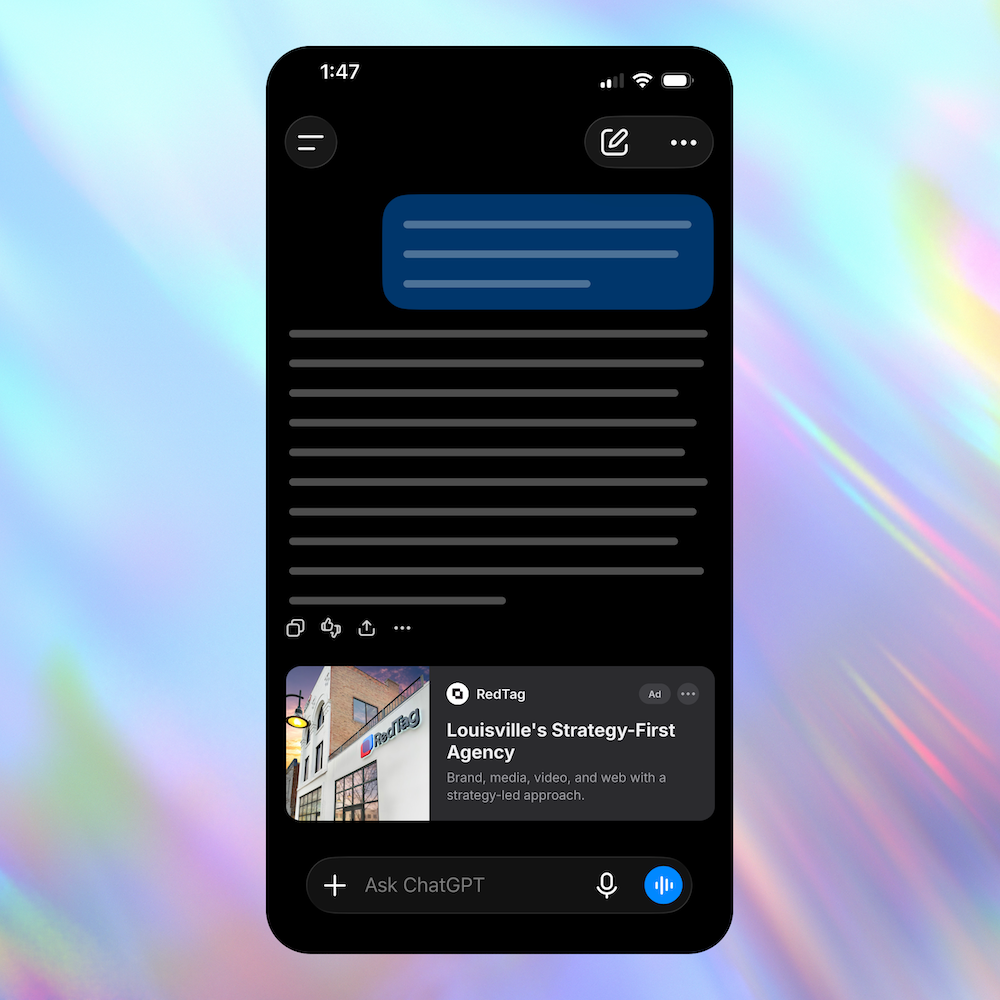
The rest of the mechanics are simpler. Ads appear below the response, clearly labeled and separated from the answer itself, with your brand name, logo, headline, short description, image, and a link. Only free and Go tier users see them. Plus, Pro, and Business subscribers don't, and neither do users under 18, which means the reachable audience currently skews toward everyday consumers rather than professionals on a company plan. Campaigns can be geo-targeted, and we'd encourage you to actually do it. We've already watched national brands serve ads into markets they don't operate in because nobody touched the default settings.
What It Can't Do Yet
The platform is in beta and it behaves like it.
Reporting can lag up to 48 hours. Delivery is inconsistent in the first days of a campaign. Measurement covers impressions, clicks, spend, and conversion tracking, which is the floor, not the ceiling, and nothing close to what you get from a mature platform. Targeting, scale, and performance are all moving underneath you week to week.
We are not recommending anyone shift significant budget here. Anyone telling you otherwise is selling something.
Two Ways to Show Up in an Answer
This is the question we're getting most, and it's worth slowing down on, because "we want to be in ChatGPT" describes two completely different projects.
Ask ChatGPT which CRM suits a small landscaping company and you'll get a paragraph of actual advice, probably naming a few products along the way. Underneath that answer, labeled and visually separated from it, you may now see an ad.
Everything inside the answer is organic. Nobody paid for those mentions. The model surfaced them because it judged them relevant and credible. The ad underneath was bought. It's the gap between asking the guy at the hardware store what he'd use and noticing a display at the end of the aisle. The display can absolutely work. But when the guy in the apron says a name, you weigh it differently, because you assume nobody paid him to say it.
Earning that mention inside the answer is what generative engine optimization is for, and the work looks like content, structure, authority, and presence across the parts of the web you don't own. Our search team examined that shift more closely in The Metamorphosis of Search, which is the better place to start if that's the half you want to understand properly.
What matters here is that the two don't feed each other. Buying ads will not make the model more likely to recommend you inside an answer, and a strong organic presence won't buy you reach among people who were never going to ask about your category. Both belong in the same strategy. We're already doing the organic side for clients, and paid only just became available.
How We'd Test It
Three months, treated as a structured test rather than a campaign. That's long enough to learn which creative and which context hints work in your category, and to establish a presence before the auction gets crowded. Our floor for this is $1,000 per month in ad spend, which is small enough to be a real experiment and large enough to produce data worth reading. We handle setup, creative, context strategy, and reporting, including pulling performance data through the API where the native reporting comes up short.
Whether it's worth doing at all depends on your category and your buyer, and for some of you the answer right now is no. We'll tell you that if it's true.
Bulova's nine dollar ad didn't sell watches. Almost nobody saw it, nobody could measure it, and the medium wouldn't matter commercially for another ten years.
What it bought was a decade of understanding television before understanding television was expensive.
The same window is open again, and it won't be for long.
RedTag is a brand agency in Louisville, KY. We've been early to every major platform shift since Facebook, and we'll give you an honest read on whether this one makes sense for your brand yet.
Matt Parks
Matt Parks
Matt Parks is an SEO Strategist at RedTag. He uses his experience in SEO strategy, content creation, and performance analytics to help brands grow their organic visibility and stay ahead in a competitive and constantly evolving digital landscape.
Share this post
Copied to clipboard
Subscribe to our newsletter
Subscribe to receive the latest blog posts to your inbox every month.




.jpg)

.gif)
